
A construction phase can end while its electrical equipment still has useful work ahead. Grid access may arrive, production may move, or a seasonal operation may change location. Containerized storage introduces the possibility of carrying an integrated energy asset into that next phase. The relevant question extends beyond transport: what duty will the equipment perform after the move, and which parts of the original installation can accompany it?
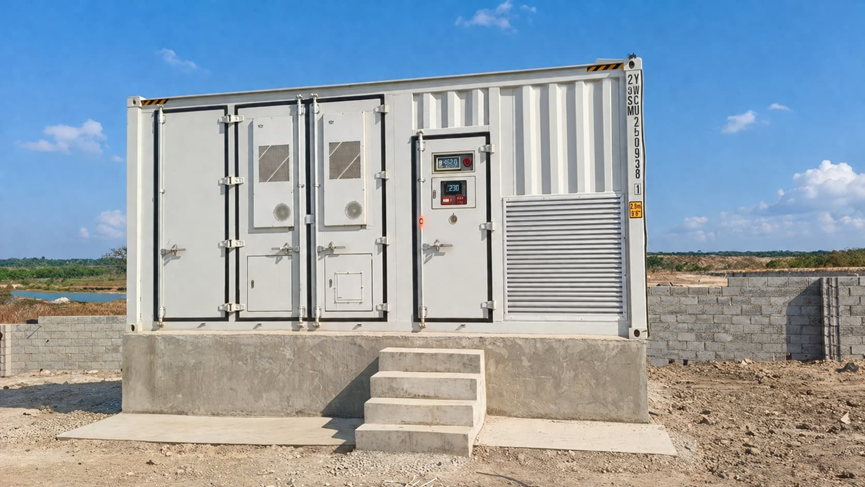
Following the Project Rather Than a Permanent Address
Temporary demand can outlast the reason for its original location. An irrigation system awaiting grid access and a warehouse requiring later backup occupy different stages of a project’s development. Their electrical needs can change even when both belong to the same owner and support the same agricultural business.
The lifecycle case for commercial energy storage solutions begins with those successive duties. The initial installation may supply an isolated load, while a subsequent installation works beside an established utility connection. That change affects source coordination and operating priorities, rather than simply replacing one site name with another on the equipment record.
Future use remains a scenario until its load and connection are identified. Equipment selected solely for an unusually demanding first phase may not match a smaller later duty, while a narrowly sized initial configuration may restrict reuse. A lifecycle assessment compares credible phases without assuming every future address will present the same electrical task.
Separating the Transported Unit from the Site Installation
A container can preserve internal equipment relationships while the surrounding installation changes. Batteries, conversion equipment and controls may travel together, retaining an identifiable system boundary. Foundations, external cable routes and the receiving site’s distribution remain outside that transported boundary and must be considered for the destination.
Packaging commercial energy storage solutions in a transportable enclosure therefore preserves only part of the installation. Supply voltage, phase arrangement, frequency and connection requirements still belong to the receiving site. The suitability of the former connection cannot establish the suitability of a new one, even if the container itself has undergone no intended configuration change.
External generation also changes the relocation picture. PV equipment positioned near an array does not automatically occupy the same transported enclosure as the battery and converter. Identifying what moves with the container prevents the next deployment from depending on equipment that remains at the original location.
Dimensions and mass turn a relocation proposal into a physical planning question. The route, destination access and installation position have to accommodate the actual unit. A transportable design provides a basis for that assessment without making every road, access opening or proposed foundation suitable.
An Irrigation Asset Given a Second Duty
At a farm in Ukraine, a GWTime container initially supplied irrigation pumps off grid before moving to a cold-storage warehouse after grid infrastructure became available at the original location. The example links reuse to a change in infrastructure. Its second application remained within the agricultural operation, while the electricity duty and installation location changed.
The associated GWESTS335-1028kWh-400-A integrates 335 kW rated power with 1028 kWh nominal battery energy in a 20-foot enclosure. Its contents include the battery system, PCS, EMS, isolation transformer, transfer equipment, temperature control and fire-safety equipment. External PV MPPT controllers are installed near the PV side rather than inside the container.
Its enclosure measures 6058 by 2438 by 2896 mm and has a specified weight below 15 tonnes. Those figures give transport and placement discussions an equipment reference. The specified 230/400 V AC arrangement also identifies an electrical condition to retain when examining a possible receiving location.
The farm example establishes a practical sequence, not an assumption that irrigation and refrigeration have interchangeable profiles. Pump operation and warehouse refrigeration can follow different schedules. The next duty therefore acquires its own operating description, including the connected load and the periods when stored energy will be called upon.
The unit’s 4G and Wi-Fi monitoring provisions support remote alerts and diagnostics. After relocation, an operating record belongs to a new combination of load and supply. Retaining that deployment context makes comparisons meaningful when the same asset has served two different electrical duties.
Reassessing Scale and Operation After the Move
Reassignment can expose a power constraint even where nominal energy is unchanged. A 1028 kWh battery accompanies both the 335 kW and 500 kW GWTime container configurations. Their different output ratings give the receiving site’s concurrent duty a separate selection test, despite the equal nominal energy available in those versions.
Load-priority, backup and peak-shaving functions in the GWTime container range support different operating assignments. A site that previously depended on isolated supply may later retain energy for interruptions or use it during particular demand periods. The operating assignment follows the new source availability and load schedule.
An existing generator at the receiving site adds its own conditions. Its rated power, minimum stable loading, voltage, frequency and controller arrangement determine the permitted charging and transfer sequence. Earlier coordination with a different generator does not carry those settings across automatically.
Relocation preserves value only where the next task fits the transported asset and the receiving installation. For commercial energy storage solutions, that fit includes the equipment remaining at the former site as well as the equipment arriving at the new one. The second deployment becomes a continuation of the asset’s life through a newly defined electrical duty.
