

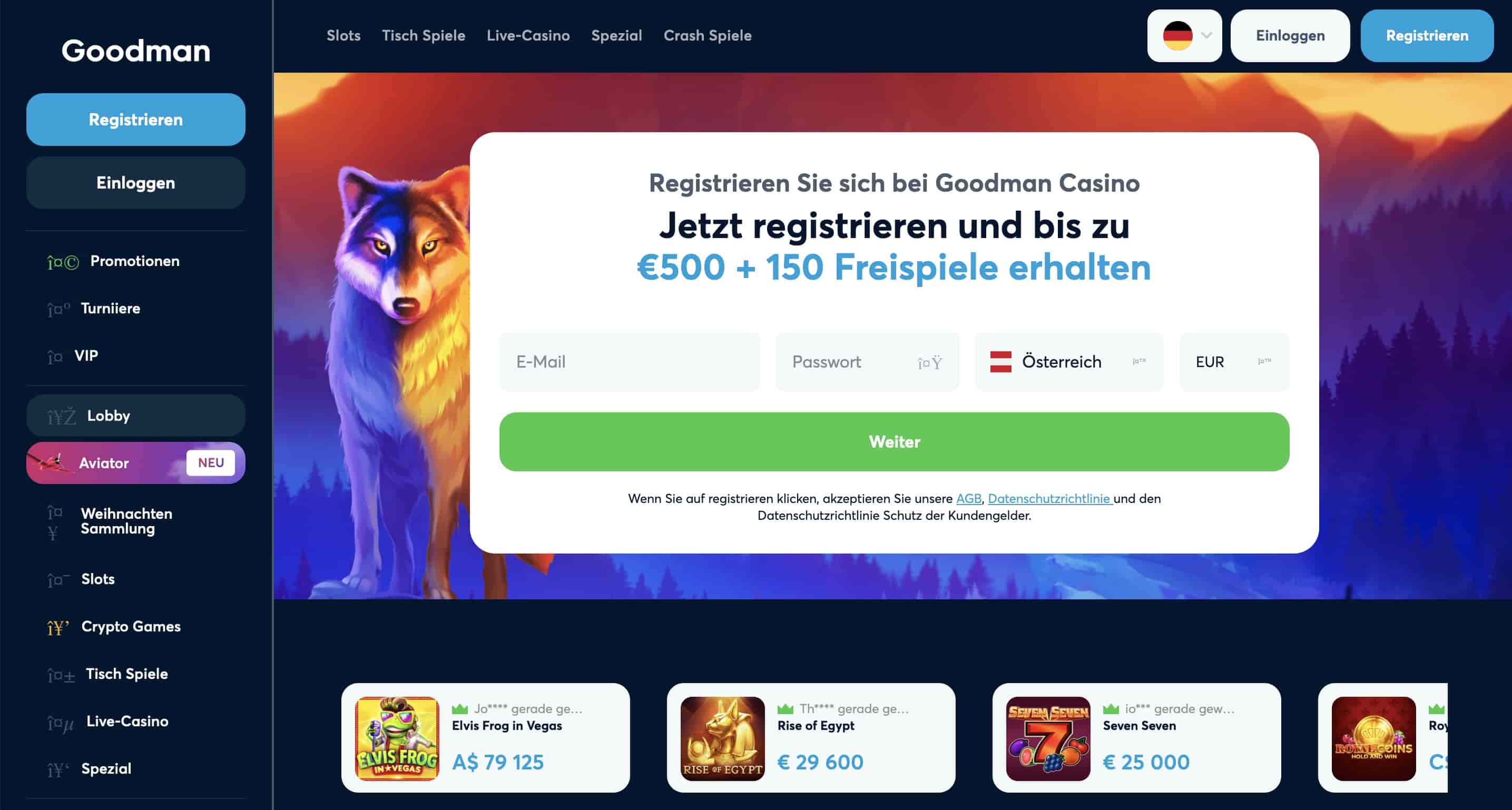
Ahead of you make your first bet at an online casino, one essential truth counts from the first click: gambling is a form of recreation, not a financial strategy or a escape of private issues. Good Man Casino treats responsible gambling as the foundation of a lasting and rewarding experience. The platform is structured around the understanding that awareness, preparation, and self-awareness define the difference between fun and risk. For new players, the selection of games, incentives, and quick action can become daunting, making it tempting to forget of time and spending. This guide offers beginners the psychological tools and hands-on techniques needed to remain in charge. It describes how to set boundaries before a session begins, how to identify the delicate psychological shifts that warn of a loss of control, and where to locate instant support if gambling ceases to feel like a decision. When a player absorbs these principles early, gambling turns from a passive activity into a intentional decision, guaranteeing that the experience remains inside the boundaries of leisure.
Dividing Gambling from Mental Well-being
Gambling should not ever be used as a coping mechanism for stress, solitude, sadness, or nervousness. A beginner must realize that the temporary dopamine surge from a win or even a close call is a neurological trick that can worsen deeper emotional cracks. When a player gambles to flee unpleasant feelings, they are not enjoying entertainment; they are performing avoidance, and the economic consequences of a losing sequence will amplify the very stress they aimed to flee. A prudent user checks their mental status before logging in. If the drive to play is grounded in boredom, sadness, or the pressure of a economic shortfall, the playtime should be canceled instantly. Alternatively, the individual should pursue other coping methods such as bodily workout, social connection, or qualified mental health care. The boundary between a pastime and a addiction is often transgressed not because of avarice, but because of a desire to dull distress. Maintaining this distinction requires honest introspection. If a gambler realizes that they cannot enjoy a pastime without the wagers being economically substantial, or if they sense empty after a playtime irrespective of the result, the activity is not any longer serving a positive role in their life.
Understanding the House Edge and Chance
A prudent gambler starts by acknowledging the statistical truth of the games they engage in. Every game at Good Man Casino operates on a rule referred to as the house edge, which guarantees that the mathematical advantage invariably lies with the house over the long term. This is not a structural defect or a concealed maneuver; it is the economic model that permits a casino to operate. A newcomer often gets caught in the snare of thinking that a “hot streak” represents a permanent alteration in chance or that a particular betting system can cancel out this intrinsic benefit. Consequences in pokies, roulette, and games of cards are determined by RNGs or real-world likelihoods that do not remember of prior results. A roulette wheel does not know it has landed on black five times in a row, and the probabilities on the 6th spin stay exactly the same. Regarding gambling through the lens of cost of entertainment, as opposed to investment return, changes a player’s mental reaction to losing. When a player accepts that the funds spent is the cost of the thrill, comparable to getting a admission for a show, the pain of a loss reduces and the impulse to pursue deficits becomes reasonably unappealing.
Managing Time to Avoid the Trance
Online casino platforms are built to be immersive, and they frequently draw players into a detached state where minutes pass like seconds. This “trance state” or “dark flow” is one of the least recognized hazards for a novice. When a player loses sense of time, the rational brain’s supervisory functions weaken and choices becomes automatic. To fight this, a play timer is equally important as a bankroll limit. A player needs to set on a predetermined length, possibly one or two hours, and activate an external alarm that necessitates physically standing up to turn it off. Good Man Casino encourages this discipline through mindfulness notifications, which may be set to pop up on display at set intervals and compel a moment of conscious reflection. During these breaks, a player needs to ask a few objective questions: Am I still enjoying myself, or am I merely clicking automatically? Have I surpassed my spending limit? Am I playing to escape a low state as opposed to for pleasure? If the answer to the last question is yes, that is a definite sign to halt at once. Treat breaks as required rest stops where you drink water and move away from the display. That resets the brain’s focus and stops the tunnel vision that causes careless betting.
Establishing Financial Boundaries Prior to You Play
A budget decided before you play is the most effective shield against gambling harm. Consider that number as non-negotiable and non-negotiable. Before accessing goodmancasino spiellimits, a player should have an honest look at their disposable income. The deposit limit should contain only funds that remain after all essential living costs (rent, utilities, food, and savings) have been covered. A helpful mental habit is to regard any deposited money as already spent the moment it enters the account, paid purely for a period of entertainment, with any winnings seen as a rare and pleasant bonus rather than a goal. The platform offers technical tools to enforce these decisions, allowing users to configure daily, weekly, or monthly deposit caps. These barriers are not a sign of weakness; they are a sign of intelligence. A common cognitive distortion among beginners is the “sunk cost fallacy,” where a player keeps depositing beyond the limit in a desperate attempt to recover money already lost. By defining a strict loss limit and holding to it with the same discipline you would apply to a household bill, a player deprives that destructive impulse of oxygen and makes sure a single bad night does not escalate into a financial crisis.
Getting Professional Support and External Resources
No player has to deal with gambling problems alone, and admitting the need for outside help is a indication of clarity, not failure. A solid responsible gambling framework reaches beyond the casino’s internal tools to a global network of professional support organizations. These services offer free, confidential, and non-judgmental assistance spanning from live chat counseling to structured therapy programs. Organizations such as GamCare, Gamblers Anonymous, and Gambling Therapy offer specialized resources that help individuals grasp the root causes of compulsive behavior and develop strategies to regain control. A beginner should bookmark these resources as a standard part of their account setup, just as they would keep a customer service number. The stigma that prevents many people from reaching out is often fed by the misconception that problem gambling is a moral failing rather than a recognized behavioral addiction. In reality, the neural pathways activated by gambling are remarkably similar to those induced by substance dependency. Good Man Casino’s responsible gambling page provides direct links to these third-party services, highlighting that the player’s long-term health is the absolute priority. A concerned family member looking for advice or a player who has noticed a loss of control can find the specialized expertise needed to move back toward stability.
Online gaming should start with caution, self-respect, and a clear-eyed understanding of risk. Responsible gambling is not about evading losses, because losses are an inevitable part of the statistical design. It is about making sure that those losses never endanger a person’s livelihood, mental health, or relationships. When a beginner integrates strict financial and time limits, comprehends the psychological traps of the trance state and loss chasing, and knows exactly where to look when control slips, a safety net emerges that allows for genuine recreation. Good Man Casino provides the technical infrastructure to maintain these boundaries, but the ultimate responsibility falls with the individual. The true measure of a smart player is not the size of a jackpot won, but the discipline to walk away at the right time, preserving the joy of the game for another day.

Recognizing the Mental Cues of Chasing Losses
Running After losses is the psychological trap that transforms a casual player into a problem gambler. It begins with a basic, seemingly rational thought: “I just need to win back what I lost, and then I will stop.” This drive is propelled by the brain’s avoidance to loss, a sensation that is mentally about twice as intense as the satisfaction of a similar gain. Hauptseite A beginner must master to detect the bodily and mental warning signs that come before this action. They commonly contain a quickened heart rate, a feeling of irritation or wrong, and a narrowing of concentration that shuts out all outside issues. When a losing session provokes hopelessness, the brain moves into fight-or-flight mode and the original budget limits get explained away. A accountable gambler acknowledges that a loss is absolute and that the next bet is a fresh, independent event, not one more round in a battle against the software. A effective strategy is to regard a losing session as the payment price of a learning experience or amusement, not as a obligation the casino is indebted to you. By mentally sealing the ledger after every session, no matter of the result, a player protects themselves from the hazardous cycle where a bad afternoon turns into a disastrous week.
Using Self-Exclusion and Cooling-Off Mechanisms
At times the wisest bet is not wagering at all. Recognizing this, Good Man Casino provides solid self-exclusion and cooling-off tools that function as safeguards for a player’s actions. A cooling-off period is a brief break, commonly ranging from twenty-four hours to six weeks, designed to interrupt a developing pattern of excessive play. This tool is ideal for a beginner who observes their leisure time is growing consumed by gambling urges or who has just endured a substantial loss and feels the desire to chase it. Self-exclusion is a more serious, extended obligation where an account is suspended for a set period, frequently six months to five years or even permanently. Triggering self-exclusion is an act of genuine self-awareness and strength. It is not a penalty but a defensive shield. During the exclusion period, the casino will cease all marketing outreach, and strict verification processes stop efforts to establish new accounts. A player should not see this tool as a final option reserved only for crisis; it is a precautionary health step, comparable to eliminating junk food from a pantry to support a diet, guaranteeing the setting corresponds with the goal of well-being.
